

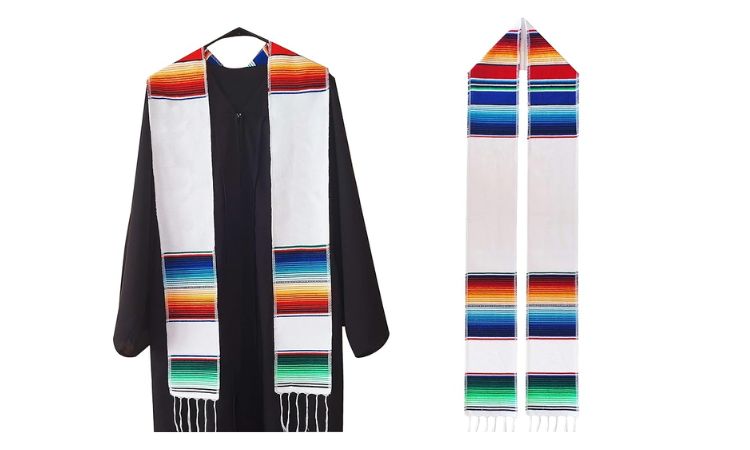
Many students think a stole is just something that adds color to a graduation outfit. That idea changes once you look closely. A sarape stole and a kente stole may both look eye-catching, but they do not mean the same thing. This is where confusion starts. Some people pick a design they like, then later inquire if it truly fits their background. That moment of doubt comes from not knowing what each stole stands for.
A sarape stole comes from Latino culture and is known for its bright stripes. A kente stole comes from African culture and uses patterns that carry deeper meaning tied to history and identity. These differences are not only about appearance. This blog explains everything in a simple way, so you can understand both and choose a stole that is right for you.
Sarape Stole Meaning, Origin, and Use
A sarape stole is a graduation stole based on a traditional Mexican cloth called a sarape. It is known for its striped design and bright colors. Students wear it around the neck during graduation. The design comes from Mexico, where this fabric has been part of daily life for a long time. It was not made for graduation in the beginning. Later, students started using it to show their background in a simple and visible way.
At graduation, a sarape stole stands for Latino or Hispanic identity. It represents family roots and a sense of pride. For many students, it adds personal meaning to the ceremony. Students wear a sarape stole during graduation or cultural events. It helps them show who they are without needing to explain it.
Kente Stole Meaning, Origin, and Symbolism
A kente stole comes from kente cloth in Ghana. It is made by weaving thin strips of fabric and joining them together. This is why the stole has block-style patterns instead of simple lines. In the past, people wore kente during special events. It was linked with respect and social status. It was not used for daily clothing. That background still shapes what it means today.
The design is not random. Colors and patterns are chosen with purpose. For example, gold is linked with success, green with growth, and black with strength. These meanings give the stole a deeper value. At graduation, a kente stole shows a connection to African heritage. It also marks effort and progress. Students wear it to carry that meaning into an important moment in their lives.
Key Differences Between Sarape Stole and Kente Stole
At a glance, the difference looks like design. One has stripes, and the other has blocks and patterns. But that is only the surface. The real gap comes from where they come from and what they bring with them.
Differences in Origin and Cultural Background
A sarape stole comes from Mexico and is tied to Latino culture. The design grew out of daily life and local traditions. A kente stole comes from Ghana. It has roots in African culture and was used in important settings, not everyday wear. That difference in origin shapes how people see it today.
Differences in Design and Visual Structure
A sarape stole keeps things simple. It uses straight stripes and strong color contrast. You can recognize it in a second. A kente stole is built differently. The patterns come from woven strips placed together. The design feels tighter and more detailed.
Differences in Meaning and Symbolism
A sarape stole shows identity through its look. The meaning is clear and direct. A kente stole carries meaning inside the design. Colors and patterns are chosen with intent. They reflect ideas like strength or growth.
Differences in Usage and Context
Sarape fabric started as part of daily use and later became part of graduation wear. Kente cloth began in ceremonial settings. It was linked to respect and important events from the start. That difference still shows in how both stoles are understood today.
Visual Identification Guide for Sarape Stole vs Kente Stole
The easiest way to tell them different is to stop looking at color first and focus on the pattern. That is where the real difference shows. A sarape stole keeps things simple. You will see stripes running straight across the fabric. The colors sit in bands, one after another, and the pattern does not really change as you move along. It feels rigid and easy on the eyes. You do not have to examine it to understand what you are looking at.
A kente stole works in a different way. Instead of stripes, it is made up of small sections joined together. These sections form blocks and shapes, and the design shifts as you look across it. It has a tighter, more detailed feel, and you can tell it was built piece by piece. If you are unsure, step back and look at the layout. Clean stripes point to a sarape stole. Blocks and mixed shapes point to a kente stole. Once you notice that, it becomes hard to mix them up.
Choosing the Right Stole Based on Identity and Purpose
Choosing between a sarape stole and a kente stole is not really about style. It comes down to what you want to represent and how that connects to you. The design matters, but the meaning behind it matters more.
When Sarape Stole is the Right Choice
A sarape stole fits if you have a connection to Latino or Hispanic culture. It reflects identity clearly and directly. The striped design also works well if you prefer something bold but not complex. It stands out without needing extra detail, which is why many students feel comfortable wearing it.
When Kente Stole is the Right Choice
A kente stole fits if you have a connection to African heritage. It carries meaning through its patterns, so it is not just about how it looks. If you value symbolism and want your stole to represent ideas like growth, strength, or unity, this choice makes sense.
Decision Checklist for Students
If you are still unsure, take a moment to think it through:
- Do you have a cultural connection to the stole you are choosing
- Do you understand what the design represents
- Does it indicate something personal about your journey
If the answer feels clear, the choice usually becomes simple.
Cultural Appropriateness and Respect
Wearing a cultural stole means something. It is not only about how it looks. It reflects a real background and a real story, so it should be worn with some thought.
Situations Where Wearing These Stoles is Appropriate
It makes sense to wear a sarape or kente stole when it connects to who you are. This can be your culture, your family background, or a group you have been part of during your studies. In these cases, the stole feels natural and personal. It also fits when the stole represents a student group or community you belong to. Many cultural groups use these stoles to show shared identity, and that gives the choice a clear meaning.
Situations to Avoid
Problems come up when the choice is only based on looks. A stole might look nice, but that alone is not a good reason to wear it. It is also better to avoid wearing one if there is no real connection or understanding behind it. These stoles carry meaning, so wearing them without that link can feel out of place.
Wearing Multiple Graduation Stoles
Wearing more than one stole is common in many graduations. It can reflect different parts of your journey, but it only works when there is a clear reason behind it.
Valid Reasons for Wearing More Than One Stole
Some students come from multicultural backgrounds. In that case, wearing two stoles can represent both sides of their identity in a fair and honest way. It also makes sense when you are part of different groups or programs. For example, a student may wear one stole for cultural identity and another for an academic or community group. This shows the different roles they have been part of during their time in school.
Situations Where it may Not be Appropriate
Wearing multiple stoles without a real connection can feel forced. If there is no link to your background, group, or experience, adding extra stoles does not add meaning. It is better to keep the choice simple and true to your story.
What to Check Before Buying a Sarape Stole?
Buying a sarape stole seems simple until you actually compare a few options. Some look good online but feel cheap in hand, and that shows on graduation day. It helps to slow down and check a few basic things before you pick one. If you want something that feels personal, it also helps to look at current custom graduation stoles trends before making a choice.
Fabric Quality and Durability
First, pay attention to the fabric. It should feel solid, not thin or weak. When you hold it, it should fall naturally and not crease too easily. A weak fabric can lose shape, and that becomes noticeable when you wear it for a few hours.
Color Accuracy and Design Clarity
Next, look at the stripes. They should be clean and easy to see, not blurry or uneven. The colors should look sharp and well-balanced. If the design looks off up close, it will stand out even more in photos.
Proper Length and Fit
Length can be easy to overlook, but it matters. The stole should hang evenly on both sides and sit well on your shoulders. If it shifts too much or looks uneven, it can distract from your overall look.
Common Mistakes to Avoid When Choosing a Graduation Stole
It is easy to treat a stole as a small detail and rush the choice. That is where things go wrong. A few simple mistakes can affect both how it looks and what it represents.
- One common mistake is choosing only based on appearance. A design may look nice, but that is not enough. If it does not connect to your background or purpose, it can feel off when you wear it.
- Another issue is ignoring the meaning behind the stole. Some stoles, like a sarape stole or a kente stole, come from specific cultures. Wearing them without knowing what they stand for can send the wrong message.
- Quality is also easy to overlook. A low-quality stole may not sit well, and it can lose shape during the event. That becomes noticeable in photos.
- Waiting too long to buy is another problem. When time is short, options become limited, and you may end up picking something that does not feel right.
Conclusion
A sarape stole and a kente stole may look different, but the real difference comes from meaning, not design. One reflects Latino heritage through simple striped patterns. The other symbolizes African heritage through patterns that carry deeper meaning. The choice becomes easier when you focus on your own connection. Think about your background, what you want to represent, and why it matters to you. That keeps the decision clear and personal. Take a little time before you choose. A stole is a small part of your graduation, but it stays with you in photos and memory. Picking the right one makes that moment feel complete.
FAQs
1. Who can wear a serape stole?
A serape stole is worn by students with a Latino or Hispanic background. It shows cultural identity and pride and is used during graduation to reflect personal roots and heritage.
2. What are the different types of graduation stoles?
Graduation stoles include cultural stoles like serape and kente, honor stoles for academic results, and stoles for clubs or groups. They show identity, achievement, or involvement during graduation.
3. Can I wear a Kente stole if I’m African American?
Yes, African American students can wear a kente stole. It shows African heritage and is used to show pride, identity, and progress during graduation ceremonies.
4. Who should wear a Kente stole?
Students with African heritage or ties wear a kente stole. It stands for identity, success, and respect for cultural traditions that are important to Ghana and the African diaspora.